
Navigating New Year Pressure: Easing in Gently Without Guilt
When the holidays come around, there’s that inevitable thought about one year coming to a close and another beginning. I’ve talked to a lot of people about this throughout December and find that there’s a wide variety of viewpoints, ranging from “I’ll think about it after I get through the holidays” to “I’ve already built my vision board.”
The truth is, there’s no right or wrong way to think about a new year, even if you don’t change a thing come January. A new year can be an opportunity to set a new tone or reset in certain areas, but it can also be a time to admire where you’re at and continue what’s working. The challenge happens when January suddenly feels like a performance review you didn’t ask for.
Pressure can build to change something (or everything) with an unspoken expectation that you create a winning streak from the first of the month that keeps your slate clean. When we get to talking about resolutions and goals, it’s so easy to feel like any day you slip up or don’t get to a new habit in the way you’d like, you’ve failed in some way.
There’s room to soften the perception of harsh rules that make it easier to give up entirely when natural human moments call for a bit of flexing, into guidelines that keep us motivated. New year goals can help you feel excited, hopeful, and aligned with the freedom to explore new ways of approaching situations or taking care of yourself without needing it to be perfect at first.
This message is all about meeting you exactly where you are, whether that is energized and ready to map out plans, feeling overwhelmed and wanting to opt out entirely, or simply unsure how to approach 2026 without burning out before January ends. Let’s talk honestly about why this pressure shows up, how to soften it, and how to step into the next chapter with a bit more grounded energy.

Why do so many of us feel pressure around New Year’s resolutions?
It’s interesting to explore when New Year’s resolutions became another source of pressure so many people carry. From SMART goals and other goal setting models to action plan templates, it's nice to remember that we can do things differently if we choose. This may not be the experience for everyone, but if it’s yours here are a few reasons that may be at the heart of it all.
The story of reinventing yourself
The idea that a new year is a clean slate began to morph into a call for dramatic transformation, especially as marketing got involved. It’s hard to hear these constant messages of “become who you’re meant to be”, “start strong from day one”, or “refresh your life” without considering if who you are right now is enough.
There may be more attention brought to things like weight loss, mental health, personal growth, career perception, and what type of gym membership you have.
Resolution language is meant to be empowering, but it can land in a familiar place of needing to push, improve, and refine to keep up with everyone else. For anyone who had a particularly hard or complex last year, the pressure to reinvent yourself or start over can grow even more.
It’s helpful to notice where these “shoulds” may come into your thinking, and get curious about what type of shift would be best for you, knowing that slowing down and spending more time getting present with your thoughts is a resolution too.
Social comparison intensifies
Whether you’re looking for it or not, comparison is high this time of year. People get excited to share their goals, advertise their new routines, showcase progress, and talk about how good they feel following their unique path into the new year. Without meaning to, your nervous system might start asking, “Should I be doing more?” or “Why can’t I do as much as they are?”
When you’re surrounded by examples of people appearing to show up in big ways, it can feel isolating to go against the grain. The fear of not belonging or falling behind may be why our protective parts might naturally challenge any intuition that says, “maybe we’re doing just fine.”
Even when you know logically that social media is a highlight reel, it can still stir up self-doubt, especially if you’re already tired or questioning yourself. It’s okay to feel your own resistance to tackling new goals right away, while taking time to figure out what changes (if any) might help you embrace an inner confidence.
Internalized expectations
When you’re high-achieving or used to doing it all, you might be familiar with inner beliefs that sound like “I should always be improving”, “I shouldn’t waste time when I can be productive”, or “I need to make the most of this fresh start and take it seriously.” They can run automatically in the back of your mind, and come out strong as planning and rigid goal-setting around the new year.
It’s helpful to bring awareness to moments when the excitement of being a go-getter is overtaken by expectations so high that you lose the enjoyment of growing and improving altogether. This is actually when deciding to trust in yourself, and your ability to seize opportunities for self-improvement can be the bigger focus to anchor into, even if that means you take more time to figure out how you want to get there or take things one step at a time to balance everything else you’re showing up for.
A desire for control
Most people like to know what’s coming and how to prepare. When the new year arrives, it’s usually following a time period that can bring unpredictability, overwhelming plans and schedules, or overflowing emotions. Planning for what the new year will bring can be a grounding way to regain some sense of control.
Whether it’s realigning to routine, making a list of what’s no longer serving you, or anchoring in a vision of what’s to come, January can make us feel like things are a bit more organized. At the same time, trying to make sense of the chaos can increase the pressure to keep it organized.
It’s always good to pay attention to how you’re setting goals for yourself. Sometimes the control-loving part of our nervous system can create a long list that feels like a steady foundation, but leaves us with too much to tackle at once. It can also become a habit of managing the future before it’s even arrived, which can make uncertainty even more uncomfortable.
The myth that “more” will create relief
There’s also a thought pattern that may pop up around having more to ease discomfort. That could be more time, more focus on work, more health, more money, more routine, and more resolutions. A lot of people will create more structure for themselves to ease exhaustion and burnout, before giving themselves a moment to rest.
Even though the idea of bringing more into your life sounds good, it can also add additional weight on your shoulders. One way to think about resolutions and goals is to remind yourself that doing less and reducing the noise may be more impactful than anything you could add to your plate. Everyone is different, so it’s important to take the moment to think about what’s landing most for you right now.
The pressure to do everything at once
Another layer of new year pressure comes from the idea that everything needs to happen immediately. We’re encouraged to review the past year, name our wins and lessons, set goals for the next one, create a plan, and end the year with something meaningful or “gram-worthy” all at the same time.
This messaging can make January 1st feel like a deadline rather than a transition. For high-achievers especially, it can turn reflection into performance and planning into urgency. Instead of feeling grounded, you might notice yourself rushing to figure everything out before you’re ready.
It can be more supportive to narrow your focus. Rather than asking the new year to hold reflection, celebration, and planning all at once, you might choose a single intention to anchor into. For some, that looks like using January to review and honor the year that’s ending, noticing growth, resilience, and effort, and letting planning wait until early February, when it feels more manageable.
This isn’t falling behind. It’s allowing each part of the process its own space and trusting that clarity often comes when you slow down rather than push forward.
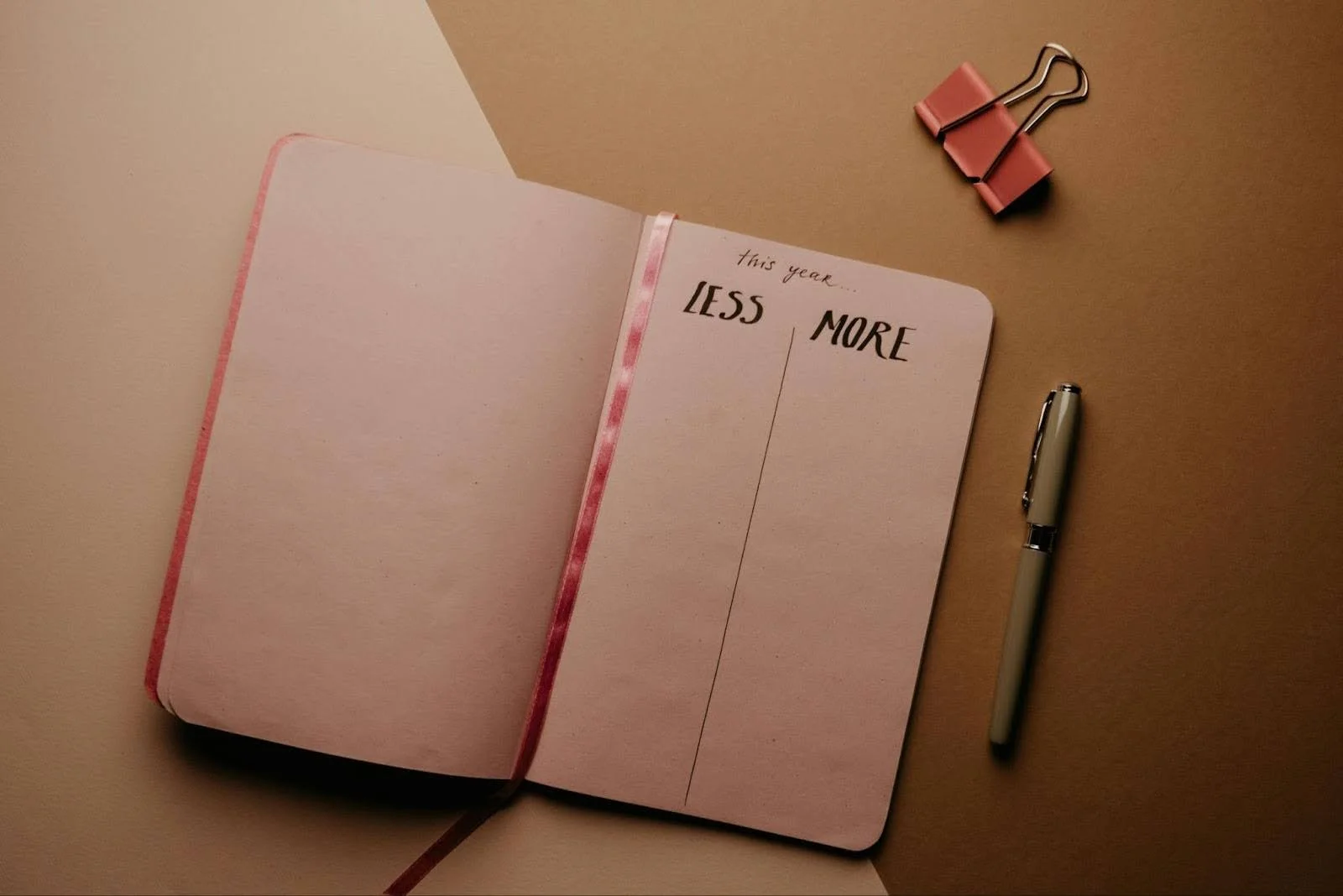
How can I deal with anxiety caused by New Year's expectations?
If you’re feeling the pressure rise around the new year, these ideas can help you slow down and feel less alone in this experience. After all, the anxiety that you may experience is usually rooted in wanting the best for yourself. We can simply take that intention and honor it in ways that don’t feel as intense or uncomfortable.
Slow the pace: Even when it feels like there are rules about when to start your resolutions and what they need to look like, try feeling into the permission to take the month of January, or even the first few months, to see what aligns most with you. It won’t take any credit away from what you can make of the year ahead.
Pause before you plan: Instead of jumping into goals just to do them or under pressure to set expectations high, try asking yourself, “What is my capacity right now?” Planning without a check-in can lead to burnout or feeling like we fail when it’s all too much to keep up with. This pause helps you boost your chances of success by tapping into the emotional responses to certain intentions and doing what feels good for you.
Normalize uncertainty: You don’t need clear answers yet, and part of planning for 12 months ahead is knowing that there is some level of uncertainty. Allow these moments of not knowing everything just yet, and trust that the answers will come with the intentions in place to guide them.
Lean into grounding when you need it: Sometimes we just need to take a moment to move the anxious energy through our bodies. That can look like gentle movement, breathwork, a short walk, or intentionally turning off distractions to be with your thoughts.
Are there effective alternatives to reduce New Year pressure?
This is such a good question, and the short answer is yes there are so many ways to mark the start of a new year with positive changes that last well beyond the moment the clock strikes midnight. It’s nice to know that resolutions are just one way to be thoughtful about a new year’s beginning. In fact, many people who feel pressure or anxiety around the idea of resolutions enjoy these other ideas to make the whole process a bit more welcoming and sustainable for the long term.
While there’s nothing wrong with a good old resolution, let’s take a look at some practical alternatives to traditional New Year’s resolutions and see what resonates most with you.
1. Themes instead of New Year resolutions
You may decide to start with a guiding theme for your new year. This could be one single word that helps you shape the rest of your year, similar to an anchor or mantra. Themes recognize that a lot can happen in a year, and give you the simplest way to be intentional without needing to know what’s coming next. All you have to think about is how you’ll honor the theme in various areas of your life, whether that’s a formal reflection process or a thought that crosses your mind from time to time.
Examples of themes that could guide a new year:
Ease
Connection
Consistency
Play
Nourishment
Slow
Love
Trust
This can be a great alternative to unrealistic goals or when New Year's resolutions fall flat because you get to look at the bigger picture first, then feel the freedom to set achievable goals from there if you'd like, from a more balanced state of mind.
2. Quarterly intentions
Another way to take things a step further and hold yourself accountable to check in a few times throughout the year without so much pressure is to set quarterly intentions. You can look ahead to the year and schedule check-in moments to set aside time just for you, reflect on the months prior, and choose an intention that best honors how you want to show up moving forward.
Looking at 3 months at a time is a bite-sized way to approach planning that may not feel as daunting and honors the natural evolution you may have throughout a year.
An example of quarterly intention check in questions to guide you:
Where did my time and energy naturally go this quarter?
How aligned did that feel with what matters most to me right now?
What’s one small adjustment that would create more integrity next quarter?
3. Micro-goals instead of New Year goal setting
One approach to breaking up such a high resolution would be to set micro-goals. These are tiny, achievable steps that build confidence instead of pressure and can help you honor your theme or intentions for the year.
Here’s what micro-goals can look like in various areas of life:
Work: Once a week, identify one task you can complete to “good enough” rather than perfect, and intentionally stop when it’s done, noticing any urge to overwork or over-explain.
Relationship: Once a week, name a need or preference out loud (even something small, like choosing the restaurant or asking for quiet time) without justifying or apologizing for it.
Self-care: Add 5 minutes to your daily shower to reflect on how you’re doing and to build uninterrupted thought time into each day.

Free template: New year planning with intention
Here’s a gentle framework to ground you in what the year ahead brings, and help you find the level of planning that feels right for you. Copy and paste, or recreate these prompts in your journal to create your very own living, breathing document you can come back to and change any time you’d like. Remember, this isn’t about getting it right, but making it something you feel inspired to come back to.
Begin with reflection: “What did I learn about myself this year?”
Take time to consider:
What stretched me this year?
Where did I surprise myself?
What felt heavy?
What felt aligned?
What habits or rhythms supported me?
What moments am I proud of?
Write freely, without evaluation.
Visualize how you want to feel in the new year
Now, let’s jump ahead to this time next year. Considering each of the life domains below, ask yourself how you want to feel. It’s helpful to write these out as if they’ve already happened. This is where you can be as detailed as you’d like, depending on where you’re at right now. Some people may paint a full picture of each life domain, while others might stick to overarching themes– and both are ok!)
Family (ex. I feel supported and like I have people to call any time I need)
Friendships (ex. I feel like I poured as much effort as my friends gave to me and that trust and genuine connections overcame any drama)
Dating & relationships (ex. I feel like I found my person, and have confidence in our next steps together)
Health (ex. I feel like I found my person, and have confidence in our next steps together)
Relationship to self (ex. I want to feel like I found myself again, and spoke up about my needs)
Career (ex. I feel empowered by my work and aligned with my purpose every day)
Joy & fun (ex. I feel excited about the adventures I’ve gone on and how I’ve loosened up to enjoy things I’ve never tried before)
Home (ex. I feel comfortable in the home I’ve created and the community I have here)
Begin by letting go
Based on that visualization and what you’ve come up with, begin to imagine these feelings all coming true for you. If you look at where things are today and where you’d like them to be, what do you need to release or create distance around?
You can think more specifically about:
Are there any relationships that aren’t serving me?
Is there a habit I have that is working against my goals?
Am I in a role (at work or personal life) that no longer fits?
Is there anything I feel I’ve outgrown?
Where do I want to spend less time and energy?
Identify any barriers or beliefs that might get in the way
As you ground in the way you want to feel, and identify where you can release to create space for that, you might notice barriers that get in the way. This is a great way to identify these obstacles or beliefs now, instead of letting them feel so big that they stop you in your tracks. You might just find that many of them are in your control and that’s a great place to start.
Barriers and beliefs that can stand between me and how I want to feel:
(Ex. perfectionist thinking, financial strains, a discouraging friend, self-doubt, my current job)
From this list, what is in my control? What do I have the power to shift if I choose to (even if it takes time)?
(Ex. I can choose to shift my self-doubt and perfectionism so I can open myself to new job opportunities without needing the “right” answer, and believing in myself enough to try)
From this list, what is not in my control? What may be external and something to be aware of instead of trying to change?
(Ex. I can’t control the current economy and salary cap at my current job, but I can be aware of it as I think about new opportunities and how to save effectively)
Turn your insights into new year mantras to ground in
As you’re thinking about all of the ways you can begin to create the life you want and feel the way you’d like in the coming year, it’s helpful to create a grounding mantra that brings together all of your ideas in a simple phrase you can lean into when you’re feeling uncertain.
Here’s a mantra bank you can use for inspiration as you craft your own, or feel free to pick out any that speak to you:
“I move at the pace my body and life can hold.”
“I don’t need to prove anything to grow.”
“Consistency matters more than intensity.”
“It’s okay to choose gentleness.”
“Small steps still count.”
“I can care deeply without carrying everything.”
“Rest is part of how I stay in motion.”
“I’m allowed to change my mind as I learn more.”
“I can be committed without being rigid.”
“This season doesn’t require perfection, just presence.”
Turn it into action with regular check-ins:
If you’re wondering where the planning and action come in, this would be your step! For some people, it feels good to fill out a game plan for every life domain that aligns to their mantra. For others, it may be a monthly practice to focus on one 30-ish day period at a time and return regularly throughout the year.
Start with personalizing your plan to your life and what’s realistic for you.
For each month of the year, ask yourself:
What are my time and energy levels typically this time of year? What is my bandwidth?
What is already on my plate (travel, busy season, family events, projects, appointments, etc.)?
What word or feeling is speaking to me for this month in particular?
Now, create micro-goals that align with your vision in each domain for this month based explicitly on the capacity you have and what’s already on your plate.
We outlined examples below to help guide your process, but feel free, as always, to put your creative spin on things and focus on categories that make the most sense for you.
Family
Desired feeling: I feel supported and like I have people to call any time I need.
This month’s micro-goals: Identify one person in my family who feels safest and check in with them once a week, even briefly.
Friendships
Desired feeling: I feel like I poured as much effort as my friends gave to me, and trust outweighed drama.
This month’s micro-goals: Initiate one intentional connection (coffee, walk, call) with someone who feels mutual.
Dating & relationships
Desired feeling: I feel like I have found my person and feel confident in our next steps together.
This month’s micro-goals: Get clearer about what safety and alignment feel like in my body after interactions.
Health
Desired feeling: Feeling steady, cared for, and supported in my body.
This month’s micro-goals: Choose one supportive habit I can realistically maintain (sleep, movement, hydration, nourishment).
Relationship to self
Desired feeling: I found myself again and spoke up about my needs.
This month’s micro-goals: Practice naming my needs privately first (journaling, voice notes, mental check-ins).
Career
Desired feeling: I feel empowered by my work and aligned with my purpose.
This month’s micro-goals: Identify one part of my work that feels most aligned and give it protected attention.
Joy & Fun
Desired feeling: I feel excited about adventures and more open to trying new things.
This month’s micro-goals: Say yes to one new or spontaneous experience, even if it’s small.
Home
Desired feeling: I feel comfortable in my home and connected to the community.
This month’s micro-goals: Make one small change that increases comfort (lighting, decluttering one drawer, adding softness).
A closing reminder: You don’t need to earn your worthiness this year
As you go into your new year, remember that no matter what you’re not behind or late. January 1st doesn’t give any more power to your intentions than any other day in the year, and you always have an opportunity to pause and think about what truly makes you happiest.
We’re always here to support you with intentional life coaching and mind-body wellness coaching that centers around standing in your corner and holding gentle accountability for the things that matter most.
Feeling inspired? Here are a few more recent posts to get curious about: